
FAQ
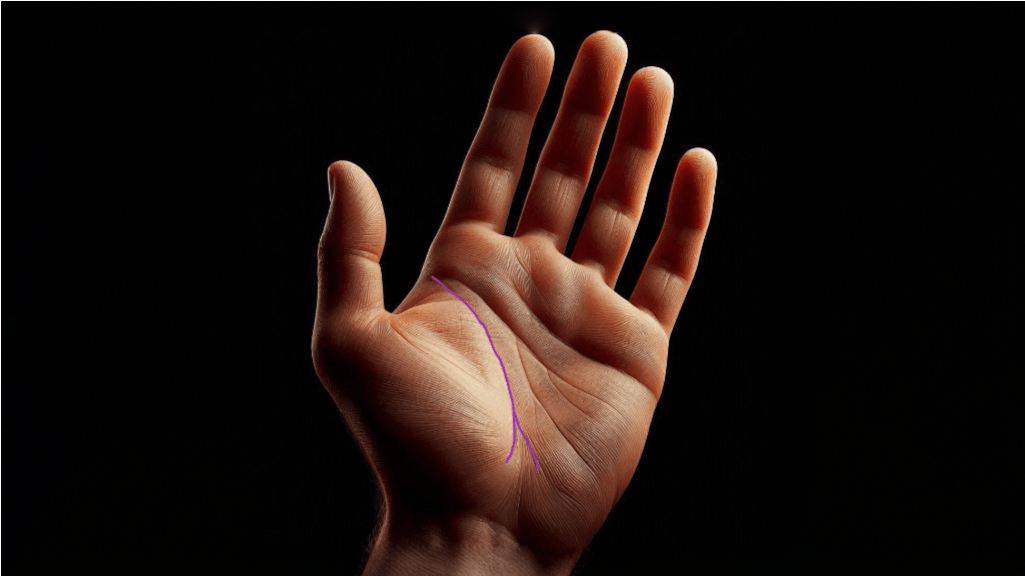
Why does the life line on the hand split at the end?
A fork at the end is a sign of change, a turning-point event—for example, transition to a new stage, change of field or lifestyle. This sign is not associated with negativity.
Is it dangerous to have a split life line?
No. Splitting reflects flexibility, openness to new experience, and the possibility of choice.
What is the difference between a fork on the left and right hand?
The right hand is responsible for realized experience, the left—for inner attitude and personal choice.
What should one do if a fork is noticed?
Compare both palms and study the details—angle, length, depth. For accurate decoding, it is better to consult an experienced palmist or AI.
Is the fork always clearly expressed?
No. With the naked eye one may not notice a smooth split—it reflects a slight personal shift, not an instant turn.
Can it be interpreted without other signs?
It is preferable to evaluate the pattern comprehensively: only comparison of different line features provides answers.