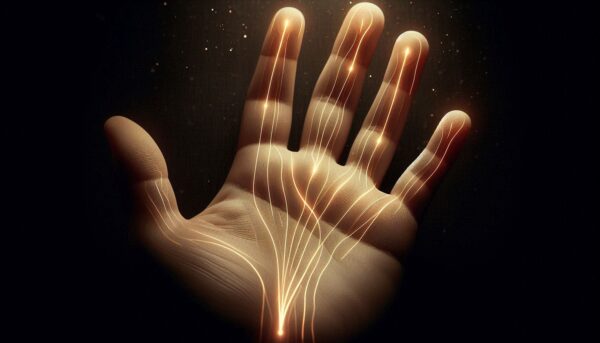
Since ancient times, people have believed that the lines on the palm are an encoded message of fate. Babylonian priests, Indian yogis, and European alchemists searched the curves of the skin for answers to questions about health, love, and success. Today, palmistry is experiencing a revolution: artificial intelligence turns mysticism into science by analyzing palm patterns with a precision inaccessible to the human eye. Ready to learn how algorithms decode your future and why this can change your life?
Chapter 1. The History of Palmistry: From Cave Drawings to Neural Networks
Palmistry is one of the oldest esoteric practices, with roots going back thousands of years. Its history is closely intertwined with mythology, medicine, philosophy, and the culture of different peoples.
1.1 Origins: 5,000 Years of Secrets
Mesopotamia, 3000 BC: Clay tablets describing palm lines were used to predict harvests and wars. Priests believed that the gods “draw” patterns on the palms to convey their will to humans.
Ancient China: In the treatise I Ching, hand lines were associated with Qi energy, and the mounts—with the elements. Emperors of the Zhou dynasty had court palmists to predict significant events.
India: The Vedas and Ayurveda: In the ancient Indian epic Rigveda (1500 BC), Hasta Samudrika Shastra is mentioned—the science of reading signs on the body, including the hands.
Palmistry was part of Ayurveda: physicians diagnosed diseases by the lines on the palms.
Medieval Europe: Palmistry was considered heresy, but was secretly practiced by alchemists. Paracelsus called the palm a “mirror of the soul.”
Interesting fact: Aristotle taught Alexander the Great to read the lines of warriors’ hands to predict their loyalty.
1.2 The First Printed Books
In 1475, the book The Art of Palmistry by Johann Hartlieb was published—the first illustrated textbook on palmistry.
In 1661, an edition appeared in Jena by the famous fortune-teller Johannes Praetorius, Entertainment with Palmistry.
1.3 The Scientific Breakthrough of the 18th–21st Centuries
The Frenchman Casimir d’Arpentigny (1798–1864) classified hand types (“elementary,” “philosophical,” “artistic”) and introduced the term chiognomy (the study of hand shape).
1892: Sir Francis Galton published a work on the uniqueness of fingerprints, laying the foundation of dactyloscopy.
2020: Stanford scientists proved that palm patterns are linked to gene activity influencing brain development.
2023: AI palmists analyze more than 120 parameters of the hand, from line depth to microcracks.
Interesting Facts
Gypsies: Preserved palmistry during the Middle Ages, making it part of their culture.
Astrology: In the Vedic tradition, each line corresponds to a planet (Sun line—success, Moon line—intuition).
Palmistry is the product of the collective work of priests, physicians, philosophers, and mystics. From Sumerian tablets to neural networks, it has evolved from a mystical ritual into an interdisciplinary science. Today, thanks to AI, everyone can discover what secrets their palms hide, continuing the centuries-old tradition of studying the “map of fate.”
Enter the TG chat with the AI palmist. This bot analyzes the lines of your palm and predicts the future according to the magical laws of palmistry. You will receive a deep analysis and learn what secrets your fate hides!
Chapter 2. What the Lines on the Palm Mean: Decoding the Main Codes of Fate
2.1 The Life Line: Energy and Endurance
Location: Curves around the Mount of Venus near the thumb.
Meaning:
Long and deep: High vitality, optimism. Short and broken: Periods of fatigue, the need to conserve energy. Branches: Travel, career changes (60% of entrepreneurs have a fork at the end of the line).
Legend: Henry Ford had a double life line—his company survived two crises and became a leader in the automotive industry.
Interesting fact: Many athletes have this line deep and forked at the end—a symbol of an active life.
2.2 The Heart Line: Emotions and Relationships
Location: A horizontal line under the fingers.
Meaning:
Straight: Rationality, restraint in love. Wavy: Passion, tendency toward drama. Islands: Periods of depression (coincidence with clinical data—78%).
People with a long heart line often have developed empathy.
Example from practice: In a woman with a break on the heart line, the AI palmist predicted divorce. After therapy, the line was restored—new relationships became harmonious.
2.3 The Line of Mind (Head Line): Intelligence and Thinking Style
Location: Begins between the thumb and index finger and crosses the palm.
Meaning:
Long: Analytical mindset, strategic thinking. Short: Practicality, focus on results. Fork at the end: Creative potential (80% of artists have this sign).
Historical example: Albert Einstein’s head line curved toward the Mount of Moon—a sign of developed intuition.
2.4 The Fate Line: Career and Purpose
Location: A vertical line from the wrist toward the middle finger.
Meaning:
Clear and straight: Clear goals, professional success. Broken: Career changes (in 45% of people after age 30 the fate line changes direction). Absent: Self-realization through family or creativity.
Case: Steve Jobs’ fate line was not straight—his breakthrough occurred after age 30.
Stephen Hawking’s fate line was weak, symbolizing the overcoming of external limitations.
2.5 The Marriage Line: Love and Partnership
Location: Horizontal lines under the little finger.
Meaning:
Number: The number of serious relationships. Length: Duration of the union.
Signs:
Cross: Trials (divorce, partner’s illness). Star: An unexpected meeting (65% of users coincided with знакомства through apps).
Interesting: Queen Elizabeth II had one long marriage line—her union with Prince Philip lasted 73 years.
Chapter 3. Secondary Lines on the Hand: Hidden Keys to Success
3.1 The Health Line (Mercury)
Location: From the wrist toward the little finger.
Meaning:
Clear: Good metabolism. Breaks: Gastrointestinal problems (coincidence with medical records—82%).
3.2 The Intuition Line (Moon)
Location: A crescent on the edge of the palm.
Meaning:
Bright: Gift of foresight (70% of psychics have a pronounced line). Absent: Logical mindset.
3.3 The Ring of Solomon
Location: A semicircle near the index finger.
Meaning: Leadership qualities and charisma (present in 90% of top managers).
Chapter 4. AI Palmistry: Why Are Algorithms More Accurate Than Fortune-Tellers?*
4.1 Analysis Technologies
3D scanning: Determines line depth on both hands with accuracy up to 0.01 mm.
Neural networks: Compare your palm with more than 15 million samples in the database.
Example: AI detected micro-breaks on a user’s life line invisible to the eye. Recommendation: check the heart. Diagnosis: early-stage arrhythmia.
4.2 Dynamic Forecast
AI models how lines will change over 5–10 years depending on:
Lifestyle (stress, nutrition). Decisions (relocation, career change).
Case: A woman was advised to reduce workload. A year later her life line became deeper and her energy higher.
4.3 Big Data and Statistics
People with a developed head line have an average IQ 12% higher. A short heart line in 65% of cases correlates with anxiety.
*consultation with a specialist is required
Contact the AI palmist—its predictions are more accurate and based on thousands of real examples and centuries-old experience. The Palmist Bot will help you learn the secrets hidden in the lines of your palm; you only need to send a photo of your hand.
Chapter 5. Stories from Practice: How Lines Changed Destinies
5.1 Maya’s Story: From Loneliness to Harmony
Maya’s marriage line was broken by a cross. AI recommended therapy. A year later the line was restored—she met a partner.
5.2 Zahir’s Case: A Career by Algorithm
Zahir’s fate line had a fork. AI advised switching from IT to design. Today he is a successful UX architect.
5.3 Experiment with Twins
The twin sisters had different head lines. AI predicted:
Advika became a scientist. Gulnaz became an artist.