
Does palmistry work and is it worth believing in it? - AI Hiromant

Does Palmistry Work (Fortune-Telling by the Hand)?

Автор

Татьяна Солнцева

Дата публикации

12.01.2026

Время прочтения

9 минут

Количество просмотров

201 просмотров

Introduction

Is it possible to read fate from the palm? This question has concerned humanity for more than one thousand years. Sorcerers were replaced by palmists, and ancient cards were replaced by the lines of the hand. It seems that something more than just skin folds is embedded in these curves—fate, character, potential. But is this really so?

Interest in palmistry does not fade: from schoolgirls to businessmen, from TikTok to scientific forums—fortune-telling by the palm remains the subject of heated debate. Some are convinced that it is charlatanism, others make appointments with specialists with trepidation. And some already trust… an AI palmist.

Today we will figure it out: palmistry—truth or not? Why do even intelligent people continue to believe in it, and how can it be dangerous? We will break it down step by step: how fortune-telling by the hand works, what science says, and what practice says.

And also—we will show how you can talk to a digital palmist. Right now, go to the Telegram chat 👉 Chiromant AI and ask your question. Your lines are already waiting for an answer.

Read to the end—you will find not only the debunking of myths, but also practical experience. After all, the hand is not only a tool, but also a mirror of our “self.”

How Palmistry Works

Palmistry is the art of prediction by the lines on the palm. The practice has its roots in ancient India, Egypt, and China, from where it later migrated to Europe and became established as one of the popular forms of fortune-telling. The main thesis of palmists is that the lines on the hand reflect not only our character, but also life events, the past, and the future.

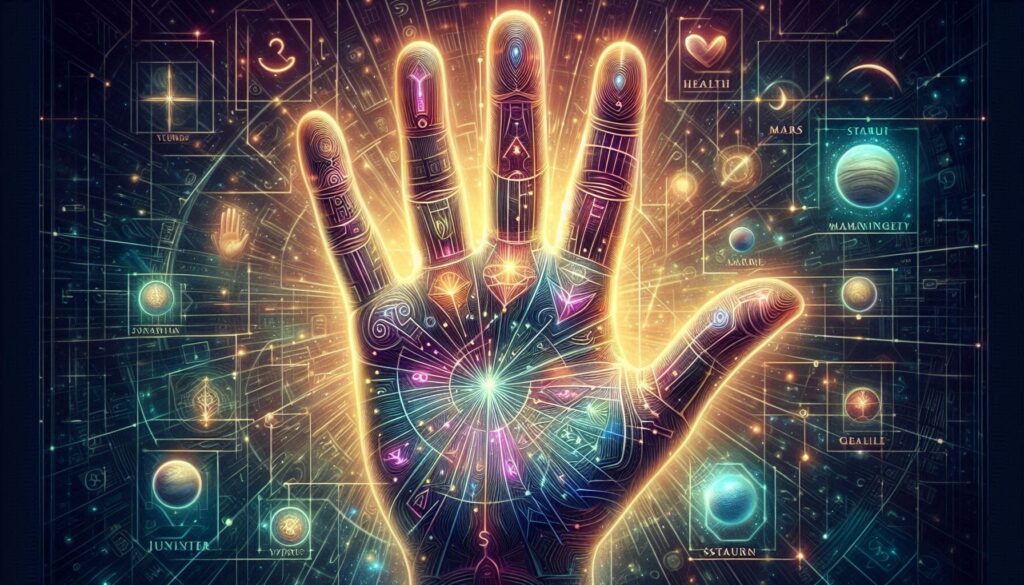
Palmists identify three main lines—the life line, the heart line, and the head line. In addition to them, there are many auxiliary ones: the fate line, health line, marriage line, travel lines. The mounts (or hills) are also analyzed—areas of the palm under the fingers, allegedly associated with planets: Venus, Mars, Jupiter, Saturn. For example, the Mount of Saturn is interpreted as a zone of responsibility, karma, and maturity.

To “read” the hand, a specialist studies the shape of the fingers, the length of the phalanges, the structure of the nails, fingerprints, and even the flexibility of the joints. Then interpretation comes into play—most often subjective.

In practice, two approaches are used. The first is classical: based on memorized interpretations. The second is modern: with elements of psychology, neurolinguistics, the Barnum effect, and cold reading. A palmist can guess, observe, and make generalizations that suit most people. For example: “You are prone to self-criticism, but you have strong intuition.” This sounds individual, although it suits almost everyone.

Does Palmistry Work (Fortune-Telling by the Hand)?

Arguments in Favor of Palmistry

Despite criticism from science, interest in palmistry does not fade. Moreover, it has arguments that make even the most convinced skeptics think.

First, the individuality of hand lines. Fingerprints are unique for every person. But the lines on the palm are unique as well. They are formed in the womb and change throughout life. This gave many reason to believe that events and character traits can indeed be “read” in them. Some palmists claim that by changes in the lines one can track how a person develops psychologically.

Second, the psychological effect. Turning to a palmist often happens at turning points: divorce, job change, crisis of self-confidence. And if the specialist gives a reassuring forecast, the person feels relief. This effect is similar to therapy: fortune-telling by the palm becomes a way to better understand oneself and structure thoughts.

Third—confirmation through experience. Many who believed in palmistry cite real examples: a palmist predicted marriage, gave advice that helped avoid a mistake, pointed out a hidden health problem. These stories make one think, especially if coincidences are repeated many times. Even doctors often admit that visual changes on the hands can indicate diseases, hormonal imbalances, and metabolic disorders.

In addition, palmistry often works like a mirror: a person hears from the specialist what they themselves intuitively felt. Such confirmation from an external source strengthens confidence in one’s own decisions.

Finally, palmistry can inspire. For some it is a way to see potential, for others—a reason to believe in themselves, and for some—even a chance to change fate if the “lines warn.”

Want to try without risk? Talk to a neuro-palmist—send your palm to the Chiromant AI bot and check what it says.

Arguments Against Palmistry

Despite its popularity, palmistry is not considered a science. Moreover, it regularly appears on lists of pseudosciences. Why?

The main argument is the lack of scientific evidence. No study has confirmed a connection between the shape of the lines on the palm and a person’s fate. The scientific community does not accept the methods and views of palmistry. One cannot say with certainty that a specific line guarantees a specific event—everything is based on interpretations.

The second is the Barnum effect. A palmist, like an astrologer, often gives generalized statements: “You are strong, but sometimes you doubt,” “You had a difficult period, but you coped with it.” Such statements suit the majority. People who believe in palmistry tend to “fill in” the meaning for themselves.

The third argument is the use of cold reading techniques. Palmists, especially experienced ones, know how to read information from a person: by appearance, reactions, clothing. This creates the illusion of insight into personality. In reality, they rely on observation and communication skills, not on the lines of the palm.

In addition, palmists’ opinions often differ. One may predict marriage, another—loneliness. For the same person, interpretations can change depending on the specialist’s mood. Such inconsistency undermines trust.

There is also a social aspect. Why do smart people believe in palmistry? Often—out of curiosity, a desire to find answers, or hope for a miracle. But in trying to understand, a person may fall into a trap of illusions, especially if they are in a vulnerable state. Fortune-telling by the hand—truth or lie—is a question with no universal answer, but most often it is a lie seasoned with good intuition and knowledge of psychology.

Why Palmistry Can Be Dangerous

At first glance, palmistry seems like a harmless game—read the palm, smile, forget. But with deep immersion, it can become dangerous.

First, dependence on external advice. People who regularly turn to fortune-tellers and palmists lose the skill of making decisions independently. They begin to wait for “signs” and advice instead of relying on logic and experience. This is especially dangerous during stress—a person seeks comfort but receives template advice that can only do harm.

Second, substitution of real help with an illusion of control. Instead of visiting a psychologist or doctor, a person goes to a palmist. Symptoms of anxiety, depression, and health problems are ignored. Those who believe in palmistry often postpone treatment, career steps, and important decisions—because “nothing is visible on the hand yet.”

Third—financial manipulation. Under the guise of “fate correction,” some pseudo-specialists extract tens of thousands of rubles. Supposedly “your money channel is blocked,” “there is a seal of poverty on the Mount of Saturn.” All this is manipulation aimed at suggestible people.

Fourth—emotional trauma. An incorrect prediction (“you will never marry,” “you have a serious illness,” “you will face a loss”) can instill fear, anxiety, and even provoke panic attacks. Especially in sensitive or unstable individuals.

Does Palmistry Work (Fortune-Telling by the Hand)?

Can Palmistry Be Trusted?

So, can fortune-telling by the hand be trusted? The answer depends on what you are looking for.

If you go to a palmist out of curiosity, for self-reflection, for inspiration—perhaps yes. In this case, palmistry works like a mirror: you hear something you already felt but could not formulate. This can be useful, like a conversation with a good psychologist. It is only important to remember: this is not science and not absolute truth.

But if you want to get clear answers, make serious decisions, build your life by the lines on your palm—you should approach palmistry critically. In such situations, trust in any external source turns into risk. You transfer control over your fate to a person who relies on interpretations, not knowledge.

Nevertheless, interest in palmistry remains. Why do smart people read palmistry? Because they seek answers and want to see patterns. We all want to know what will happen and believe that fate is predetermined—especially when things are difficult. Palmistry gives this illusion.

So should one believe in palmistry? As with many things—with reason. As a way to look at yourself from a different angle—yes. As a guide to action—no. Believe in yourself, not in the lines on the skin. Remember: your hand is your story, but only you can write it.

And if you still want to “try on” palmistry, let it be in a safe format. For example, in the Chiromant AI chat bot. Without bias, pressure, or unnecessary pathos. Just—a view from the outside. Perhaps it will say something important. Or perhaps—you will realize that you already knew the answer.

FAQ

Palmistry—truth or not?

There is no scientific evidence for palmistry. It is a pseudoscience based on subjective interpretations. But as a method of reflection, it can be useful.

Should one believe in palmistry?

If treated as a metaphor—yes. As a decision-making tool—no. Believe in yourself, not in others’ interpretations of lines.

Why do smart people believe in palmistry?

Because they want to find answers. Often—at a difficult moment in life. This is not stupidity, but a search for support. It is just important not to confuse symbolism with truth.

Can the line be strengthened?

From the point of view of science—a lie. From the point of view of psychology—it can be truth if it helps a person better understand themselves.

Can messages from a bot be trusted?

Yes, if perceived as advice or reflection. An AI palmist will not manipulate or take money for “karmic cleansing.”

Why is palmistry dangerous?

It can replace real help, harm the psyche, and make a person dependent on predictions—especially if the person is suggestible.

Where can one try safely?

In the Telegram bot Chiromant AI. This is not magic, but an intellectual experiment. And—absolutely free.
[bws-rating]